Answering The Warning Light Before The Car Leaves The Driveway

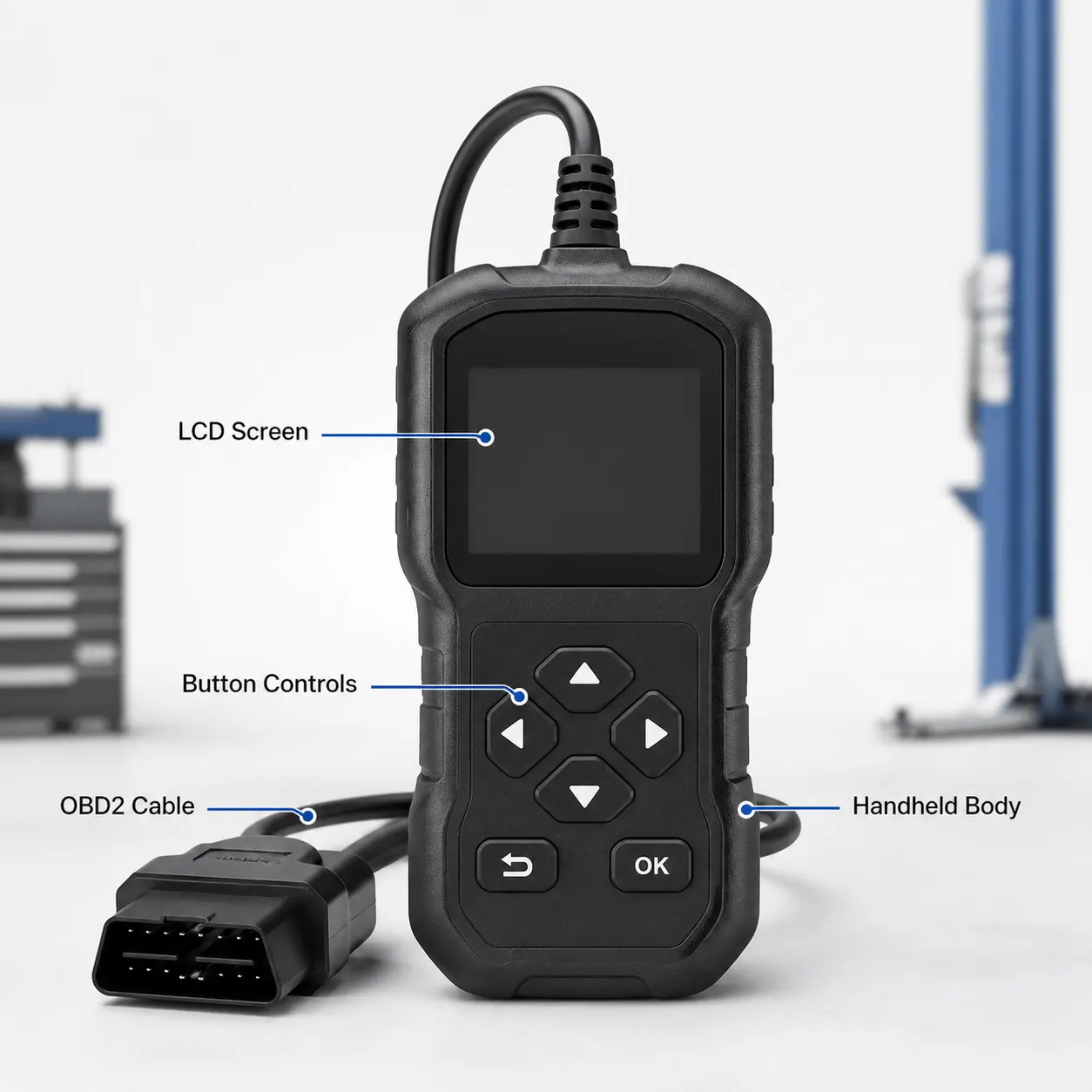
Product feature overview

If you are searching for an OBD2 scanner ABS SRS UK, the useful short answer is this: choose a scanner that clearly states access to engine, ABS, SRS and transmission systems, then check your exact make, model and year before buying. A tool such as the TOPDON AD500-A is documented as covering those four systems, showing diagnostic trouble codes with explanations, live data graphs and reports, but it should be treated as a first-pass diagnostic aid rather than proof that a car is safe or repaired.

That distinction matters when the car is parked outside a terrace in Manchester at 7.30 am and the dashboard has lit up before work. A basic engine-only reader may help with an engine management light, but it may leave an airbag or ABS warning untouched. A four-system scanner is more useful when the question is not just “what is the code?” but “which part of the vehicle is asking for attention, and what should I record before speaking to a mechanic?”

Where This Fits In A UK Driveway, Garage Bay Or Packing Bench

The typical buyer is not trying to replace a full workshop diagnosis. They are trying to avoid turning every warning light into a paid mystery. On a driveway in Sheffield, a small independent garage bay in Cardiff, or a shared family parking space in Glasgow, the immediate job is to plug in, identify the affected system, read the stored information and decide the next sensible step. That may be booking a garage, checking recent repair work, or simply saving a report before any code is cleared.

This is especially relevant around MOT pressure. ABS and SRS warning lights feel urgent because they are visible, safety-related and hard to ignore. The scanner cannot make an MOT decision for you and it cannot confirm a repair just because a lamp goes out. What it can do is give you a clearer starting point: engine, ABS, SRS or transmission, plus the code context and live-data clues available through the tool, so the garage conversation starts with evidence rather than guesswork.

Checking The Documented Facts Against The Car In Front Of You

The documented product facts for the TOPDON AD500-A say it accesses four systems: engine, ABS, SRS and transmission. It is also described as supporting OBD2 tests across 67 manufacturers and more than 10,000 models, with coverage across North America, Europe and Asia, but the important buyer step is still compatibility checking. The product copy itself says to make sure the OBD2 scanner is compatible with your vehicle before buying, so do not treat broad coverage as a guarantee for every UK registration on the street.

The useful documented capabilities are practical rather than decorative: AutoVIN is described as a five-second one-touch feature, DTC explanations are included, up to four live-data streams can be viewed graphically, and reports can be generated, emailed and printed. It has Android 11.0, 32GB ROM, a 5-inch touchscreen, rubberised buttons, WiFi updates described as free for lifetime, and up to 10 hours of battery life. The package is stated to include a charging cable, not a power adapter, which is a small but real setup detail to notice.

When Four-System Access Is Worth Paying Attention To

Four-system access becomes valuable when the warning light is outside the comfort zone of cheap readers. Engine codes are only part of the story. ABS lights may relate to braking control systems, SRS lights may relate to airbag or restraint circuits, and transmission faults can be expensive to misunderstand. A scanner that can at least read those system areas gives a home mechanic or used-car buyer a wider view before they decide whether the vehicle needs specialist attention.

For a used-car viewing in a supermarket car park near Nottingham, the same logic applies. A clean dashboard does not prove there are no stored or pending clues, and a scan before and after a test drive can support a better conversation with the seller. It should not replace an inspection, MOT history check or professional assessment. It simply adds another layer: system-level fault evidence, code explanations and a record you can revisit once the pressure of the viewing has passed.

Mismatches That Should Stop A Rushed Purchase

This is not the right buy if you only want the cheapest possible engine-code reader and do not care about ABS, SRS or transmission access. It is also not the right expectation if you want a tool that guarantees a repair route, certifies a car as safe, or replaces a trained diagnostic technician. Fault codes often point to a circuit, symptom or condition, not a single part that should automatically be replaced. Clearing a code without fixing the underlying issue can simply make the light return later.

There are also fit limits to respect. The documented copy refers to cars made in 2005 and newer for erasing DTCs to turn off warning lights after repair, and it separately mentions compatibility with the majority of 1996 and newer OBDII-compliant automobiles. Those statements are not the same as universal UK vehicle coverage. Before buying, match the vehicle make, model and year, and be especially careful with older cars, imports or unusual trims where module access may differ from the headline coverage.

A Practical Scanner Checklist For The Kitchen Table Or Workshop Bench

Use this checklist before ordering, while setting up, and before clearing anything. Vehicle check: write down the make, model, year and the warning light shown, then confirm compatibility rather than relying only on broad coverage claims. System check: decide whether the job needs engine only, or engine plus ABS, SRS and transmission. Setup check: note that the package contains a charging cable and not a power adapter, and plan for WiFi if you want to use the one-touch update feature.

Diagnostic check: read and save the DTCs before erasing them, because a mechanic may need that evidence. Live-data check: use the graphing function when the fault is intermittent or when you need before-and-after repair context, keeping in mind that live data is a clue rather than a verdict. Report check: generate, email or print the report if you are comparing family cars, preparing for a garage visit, or keeping a record after work in a small workshop bay. Aftercare check: clear codes only after repair work or a reasoned check, not as a way to hide a warning lamp.

Using The Tool Without Turning Codes Into Guesswork

A good workflow is simple. First, scan the car while it is stationary and record which system reports the issue. Second, read the DTC explanation and avoid jumping straight to a parts order. Third, where relevant, look at live data and compare it with the symptom you actually felt: rough running, warning light after seat work, brake-related concern, or transmission behaviour. Fourth, save the report before making changes, because the record is often more useful than a remembered code number.

For a serious home mechanic or light trade helper, the strongest use is pattern recognition over repeated jobs. If family cars keep coming back with warning lights, saved reports help separate a fresh fault from an old stored clue. If a warning returns after repair, the before-and-after record gives structure to the next step. The scanner earns its place when it reduces vague conversations, not when it is treated as a magic answer box.

What To Share With A Garage Or Seller

When you speak to a garage, translate the scanner output into human terms. Say which system reported a code, whether the light is current or returned after clearing, what symptom the driver noticed, and whether you have a saved report. For example, “The SRS light stayed on after moving the seat, and the scanner saved the code report” is more useful than “the car has an electrical problem”. The documented report sharing and printing functions are there for exactly this kind of record keeping.

When buying privately, ask permission before plugging into the OBD port and keep the tone practical rather than accusatory. Explain that you are checking for stored warning-light clues before making a decision. If the seller refuses, that does not prove a hidden fault, but it does affect your confidence. If codes appear, treat them as negotiation or walk-away evidence only when they fit the wider picture: MOT history, test-drive behaviour, dashboard lights and the general condition of the car.

The Grounded Next Step Before You Buy

The next step is to match the tool to the actual job, not the anxiety of the warning light. If you mainly need ABS, SRS, engine and transmission code access on compatible OBD2 vehicles, plus DTC explanations, live-data graphs and shareable reports, the documented AD500-A feature set fits that kind of UK driveway or small-workshop triage. If you only need occasional engine-code reading, it may be more tool than you need. If you need advanced professional diagnostics beyond the four stated systems, treat this as a first-pass scanner, not the whole workshop platform.

Before purchase, check the vehicle compatibility, confirm that the four systems listed are the systems you need, and plan how you will use the results. The most sensible buyer is not trying to clear lights casually. They want to capture evidence, understand the affected system, avoid repeated basic scan fees, and decide whether to repair, ask better garage questions, or step away from a risky used car. That is where an OBD2 scanner ABS SRS UK decision becomes practical rather than speculative.